
A New Type of Shark Scale
By: Eric Vorst
In the summer of 1975 the father of the summer blockbuster was born with the release of Steven Spielberg’s “Jaws.” This movie has continued on through generations to instill a primal fear of the deep blue sea for every tourist and beach native in the continental United States. The 124 min cinematic masterpiece has caused frenzy in the public since then making every rare encounter between man and shark into the next serial killing man-eater. In all truth however, very rarely do sharks actually kill people. More often than not shark attacks are mere scratches in the terms of the damage a shark would do to something it was intentionally hunting. Almost all fatalities from shark attacks are due to one of two reasons, either the person bitten goes into shock and drowns, or severe blood loss from the initial wound not being treated quickly enough. In order for doctors and response teams to be able to assess the damage of different types of shark attacks more quickly a group of researchers have recently devised a bite ranking system. The system is being implemented in hopes that it will lower mortality rates for bite victims because they receiver faster medical treatment.
The Shark Induced Trauma Scale (SIT) is what a research group from Florida have come up with after years of recording and interpreting shark attacks. These scientists have reviewed over 4,409 cases of alleged shark attacks. The records for these attacks are kept and investigated at the International Shark Attack File department, located in the Florida Museum of Natural History. During their research 96 specific cases had all of the information concerning hospital records, depth of water, type of shark, and area of most traumatic damage. These 96 isolated cases are what the research team used to define the different levels on the SIT scale. After separating the attacks based on their similarities the scientists came up with 5 distinct levels of bite damage. Each level differs in the damage a victim suffers in certain areas: tissues, muscles, tendons, bone, and vascular system. Out of the 96 attacks that were focused on 40 were Level I injuries, 16 were Level 2 injuries, 18 had suffered Level 3 injuries, 14 had Level 4 injuries, and eight recorded Level 5 injuries.
The first 2 levels of injury differ mostly with the size of the laceration that is given by the shark. Level 1 bites are fairly routine fixes, requiring simple sutures and antibiotics. Normally these happen in shallow water less than waist deep and the victim can easily get to shore under his or her own power and receive treatment. When a slightly larger wound is received and muscle tissue or ligaments are damaged then it becomes a Level 2 situation. Level 2 is when the attack is more than noticeable and the damage requires a short hospital stay. Normally in these two levels full function to the affected area is almost always restored.
Level 3 and Level 4 attacks require much quicker medical attention than the previous two. After a person has suffered a Level 3 attack they will have had major tissue, muscle, and ligament damage. Reconstructive surgery and cosmetic surgery will be extremely important along with intense cleansing of the wound. Because so much flesh is removed in these attacks infections are frequent and normally more deadly than the bite damage. A Level 4 bite typically happens in deeper water outside the surf zone. The amount of tissue removed along with muscle and minor vascular damage requires immediate surgery and sterilization. Doctors must operate immediately in order to save these victims because the rate of infection and blood loss is increased dramatically from Level 3.
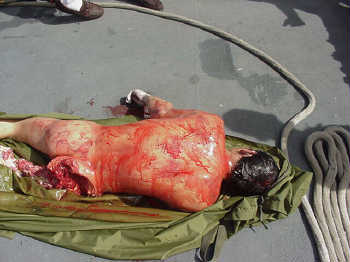
The final level has the highest mortality rate due to the intense damage done to the vascular system. Level 5 bites almost always end in death due to extreme blood loss. The rapid blood loss causes victims to go into shock extremely fast so even if they make it to shore, which they are usually a good swim from, the odds of them being able to get medical treatment quickly enough is slim.
The benefits of this new scale for assessing the damage caused by a shark attack should allow medical teams to respond much more quickly than in previous incidents. If on site teams can identify the situation and relay it to the surgeons waiting at the hospitals then more victims will have a better chance of surviving. Being more prepared by having an outline of the damage will give surgeons an easier time neutralizing the more deadly aspects of every wound. Also thanks to the continuous recording of these attacks hopefully there will so be a correlation between areas and time of year that these more deadly attacks are taking place. The SIT scale should greatly increase the response rate of lifeguard, EMS, and surgeons when dealing with shark attacks of the future.
The first 2 levels of injury differ mostly with the size of the laceration that is given by the shark. Level 1 bites are fairly routine fixes, requiring simple sutures and antibiotics. Normally these happen in shallow water less than waist deep and the victim can easily get to shore under his or her own power and receive treatment. When a slightly larger wound is received and muscle tissue or ligaments are damaged then it becomes a Level 2 situation. Level 2 is when the attack is more than noticeable and the damage requires a short hospital stay. Normally in these two levels full function to the affected area is almost always restored.
Level 3 and Level 4 attacks require much quicker medical attention than the previous two. After a person has suffered a Level 3 attack they will have had major tissue, muscle, and ligament damage. Reconstructive surgery and cosmetic surgery will be extremely important along with intense cleansing of the wound. Because so much flesh is removed in these attacks infections are frequent and normally more deadly than the bite damage. A Level 4 bite typically happens in deeper water outside the surf zone. The amount of tissue removed along with muscle and minor vascular damage requires immediate surgery and sterilization. Doctors must operate immediately in order to save these victims because the rate of infection and blood loss is increased dramatically from Level 3.
The final level has the highest mortality rate due to the intense damage done to the vascular system. Level 5 bites almost always end in death due to extreme blood loss. The rapid blood loss causes victims to go into shock extremely fast so even if they make it to shore, which they are usually a good swim from, the odds of them being able to get medical treatment quickly enough is slim.
The benefits of this new scale for assessing the damage caused by a shark attack should allow medical teams to respond much more quickly than in previous incidents. If on site teams can identify the situation and relay it to the surgeons waiting at the hospitals then more victims will have a better chance of surviving. Being more prepared by having an outline of the damage will give surgeons an easier time neutralizing the more deadly aspects of every wound. Also thanks to the continuous recording of these attacks hopefully there will so be a correlation between areas and time of year that these more deadly attacks are taking place. The SIT scale should greatly increase the response rate of lifeguard, EMS, and surgeons when dealing with shark attacks of the future.


No comments:
Post a Comment